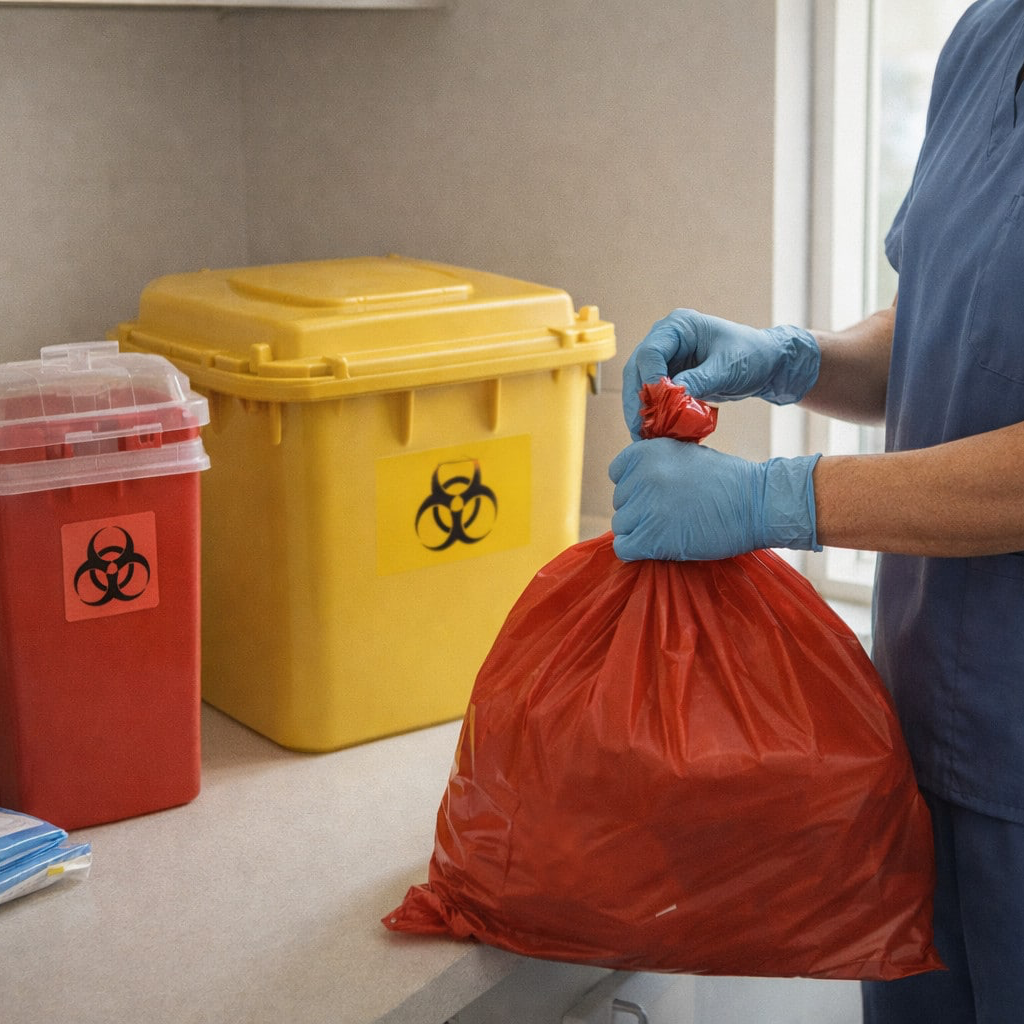
Bio-medical Waste Disposal
Sanitec Limited provides secure collection, transportation, treatment, and final disposal of biomedical and infectious waste generated by hospitals, laboratories, medical/cosmetic clinics, pharmacies, veterinary facilities, and research institutions.
Our system ensures safe containment, sterilization, and destruction of infectious materials to eliminate biological risk and prevent environmental contamination. Waste is processed using approved treatment technologies such as chemclave, shredding, and high-temperature destruction via incineration, ensuring that infectious materials are fully decontaminated and neutralized before final disposal.
That includes:
Sharps and Infectious Waste
- Needles, syringes, lancets
- Scalpel blades, dental, veterinary sharps
- Tattoo and piercing sharps
- Histology waste, lab specimens
- Chemotherapy waste
- Bodily contaminated reagent fluid
Pathological / Anatomical Waste
- Human tissues / animal tissues
- Organs
- Body parts
- Blood-soaked materials / contaminated animal bedding
Pharmaceutical and Medical Waste
- Expired medications
- Controlled substances
- Vaccines
- Biological cultures / petri dish
- Diagnostic test kits
- Healthcare operational waste
- PPE (gloves, masks, gowns)
- Contaminated lab materials
- IV bags and tubing
- Disposable medical devices
Radiological & Special Medical Waste
- X-ray processing chemicals
- Radioactive contaminated materials
Compliance and Regulations
Sanitec’s biomedical waste management services support compliance with environmental and health regulations in Trinidad and Tobago, including requirements set by the Environmental Management Authority (EMA).
Relevant regulations and guidelines include:
- Environmental Management Act
- Certificate of Environmental Clearance (CEC) Rules
- Waste management guidelines issued by the EMA
- Occupational Safety and Health Act
- Public Health Ordinance
These regulations govern the proper storage, transport, treatment, and disposal of biomedical waste, ensuring that infectious materials are safely managed to protect public health and the environment.